Failing to carry or use chains when Washington law requires them can affect fault after a mountain pass crash. A chain-law violation doesn’t automatically make a driver legally responsible for a collision, but it might suggest the driver failed to take responsible precautions for winter road conditions.
Washington allows transportation officials to require chains or other traction equipment when snow, ice, or other conditions make a highway unsafe. Drivers who disregard a posted requirement can face a $500 traffic penalty. Of course, a monetary fine is preferable to another possible outcome: causing a serious or even fatal crash.
When a truck loses traction, jackknifes, slides across lanes, or can’t come to a safe stop, everyone nearby is at risk of injury. If the loss of traction could have been prevented with the use of chains, the driver of the truck may be negligent under Washington law. In these situations, a truck crash attorney in Washington can investigate whether a chain law violation contributed to your injury, determine liability, and help you seek the full compensation you deserve.
Talk to a Truck Crash Attorney in Washington for Free
To schedule a free and confidential consultation at Fuller & Fuller, call (800) 570-4878 today. With offices in Tacoma and Olympia, our experienced truck accident attorneys serve victims of serious injury living in Pierce County, Thurston County, and all surrounding areas of Washington.
What Is Washington’s Commercial Vehicle Chain Law?
Washington imposes specific winter chain requirements on large vehicles because losing traction in a fully loaded commercial truck can have devastating consequences.
Under WAC 204-24-050, vehicles or combinations of vehicles with a gross weight rating (GVWR) over 10,000 pounds must use chains when chain requirements are posted. The precise number and placement of chains depend on the vehicle’s axle configuration.
For reference, passenger vehicles typically range from 3,000 to 5,000 pounds. Delivery vans can range between 4,000 and 10,000 pounds. Large commercial vehicles can hit weights up to 80,000 pounds.
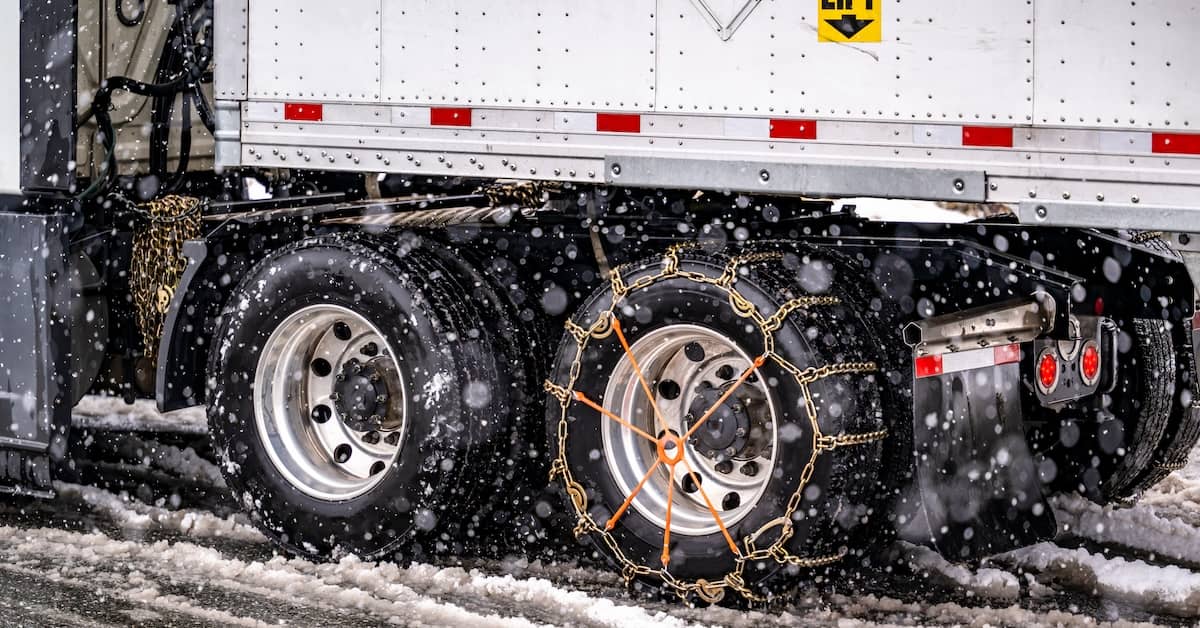
When chain laws are in effect, larger commercial vehicles are required to have chains on all cab tires plus at least one side tire on either side of a trailer. Washington’s chain law requires vehicles over 10,000 GVWR to carry at least two additional chains as well, in case conditions worsen or chains in use break or become unusable.
On designated routes, large commercial vehicles are required to carry sufficient chains from November 1 through April 1, regardless of weather conditions. These routes include portions of:
- I-90 between North Bend and Ellensburg
- US 2 between Index and Dryden
- US 12 between Packwood and Naches
- SR 410 between Enumclaw and Naches
- SR 524 on the Mount Baker Highway
- I-82 between Ellensburg and Selah
On these routes, chains must be in the vehicle even when not on the tires. A commercial driver might be in violation of Washington’s chain laws simply by failing to carry the required chains, even if conditions hadn’t yet reached the point where chains would be needed.
When you are injured, or a loved one is killed by a trucker in violation of Washington chain rules, you are entitled to hold them accountable and seek compensation for all of the ways the accident has changed your life.
Does Washington’s Chain Law Apply to Passenger Vehicles?
Yes. Chain and traction requirements can apply to passenger vehicles as well as commercial trucks.
Washington drivers may encounter the following warnings:
- Traction Tires Advised
- Traction Tires Required
- Tire Chains Required
- Chains Required on All Vehicles
When chains are required, qualifying AWD and 4WD vehicles under 10,000 pounds are usually okay to proceed as long as all wheels are engaged, the vehicle has approved traction equipment, and chains for at least one set of drive tires are carried in the vehicle.
However, it’s never safe to assume four-wheel drive, all-wheel drive, or studded tires eliminate every chain requirement. During extreme conditions, WSDOT can require all vehicles to install chains.
Mountain weather can change quickly. Drivers crossing Snoqualmie, Stevens White, or other Washington mountain passes should check current conditions and restrictions before heading out.
Who Can Be Held Liable for a Crash Involving a Chain Law Violation?
As with all accidents, liability will depend on who causes the crash. Chain laws can play a role in that.
For example, suppose a tractor-trailer enters a chain-required area without installing chains, loses traction on an icy grade, jackknifes, and strikes another vehicle. In this case, a violation of Washington’s chain rules could help to establish that the truck driver failed to operate the truck safely under conditions.
With truck accident claims, however, this may not be as straightforward as it seems. These claims often involve parties that weren’t on the scene of the crash.
Potentially responsible parties for a truck accident caused by an out-of-control tractor-trailer include:
- The truck driver for failing to carry or install chains, driving too fast for conditions, or otherwise operating the vehicle unsafely.
- The trucking company for failing to hire and train qualified drivers, failing to provide necessary equipment, or inadequate company policy enforcing chain use.
- Another driver for actions that cause a truck to lose control, including failing to chain up or have approved traction devices.
- Multiple parties in cases where several actions combine to cause a crash.
A chain-law citation can be one piece of the liability puzzle. So too can things like distraction, drug and alcohol use, visibility issues, and the behaviors of everyone involved. This can be very confusing to sort out. As specialists in accident and injury law, Fuller & Fuller has the experience and background necessary to fully investigate these accidents, identify each liable party, and help you pursue fair compensation.
How Can a Truck Crash Attorney Help?
Mountain Pass truck crashes can require a significant amount of investigation. A truck crash attorney in Washington may need to examine evidence such as:
- WSDOT traction requirements at the time the crash occurred
- Whether chains were properly installed
- Photographs and video of the truck and roadway
- Police and Washington State Patrol records
- Truck inspection and maintenance information
- Driver logs and electronic vehicle data
- Company winter-driving policies
- Weather and roadway conditions
- Witness statements
At Fuller & Fuller, we have represented injured people and families in Washington since 1972. We understand that a serious truck crash can change your life forever. We’re here to investigate its cause, identify the parties responsible, and pursue the compensation you need to move forward.
Talk to a Washington Truck Crash Attorney for Free
If you were injured in a crash involving a commercial truck on Snoqualmie Pass, Stevens Pass, White Pass, or another Washington roadway, questions about chains and winter-driving rules may become an important part of your case. Use our online contact form or call our Tacoma or Olympia office today to schedule a no-cost, no-obligation case review and let us help you understand how best to proceed.