


What does Washington law consider child abuse or neglect in a foster home?
What is considered child abuse and neglect is often broader than many people realize. It can include any injury that harms a child’s health, safety, or welfare, including:
- Physical abuse
- Sexual abuse
- Sexual exploitation
- Serious emotional harm
- Neglecting basic physical or educational needs
In foster care cases, abuse is not always limited to visible bruises or a single, shocking event. A child may be harmed by repeated neglect, sexual exploitation, trafficking, or any pattern of dangerous conduct that puts the child’s safety at risk.
If you or someone you care about is a survivor of foster care abuse in Washington, Fuller & Fuller is here to help. Compassionate, attentive, and supportive, we can help you understand your rights, navigate the legal process, and seek compensation for all of the ways your mistreatment has affected your life.
When does discipline cross the line into abuse in Washington?
Foster parents have the right to discipline the children in their care. However, there is a line when it comes to disciplining foster kids, and some conduct clearly crosses it.
Discipline may become abuse when it involves:
- Throwing a child
- Kicking a child
- Burning or cutting a child
- Striking a child with a closed fist
- Shaking a very young child
- Interfering with a child’s breathing
- Threatening a child with a deadly weapon
- Causing bruising
- Imprisoning a child for a sustained period
- Withholding food
In foster care cases, some adults try to excuse abusive conduct by calling it discipline. But applying that label doesn’t change the facts. Harmful conduct is harmful conduct, and once “discipline” becomes cruel, excessive, or the daily standard, it may qualify as abuse under Washington law.
At Fuller & Fuller, your experiences are listened to and believed. If you experienced abuse, even if your foster parent(s) claim it was necessary, we can identify where lines were crossed and help you pursue justice for the treatment you endured.
What is considered sexual abuse in a Washington foster home?
In Washington, foster home sexual abuse can include:
- Sexual assault
- Sexual exploitation
- Grooming behavior
- Coercion
- Exposure to pornography
- Taking sexual images of a child
- Encouraging sexual conduct
- Sex trafficking
Some survivors don’t see what they experienced as abuse right away. Some were manipulated. Some were threatened. Some were taught to stay quiet. None of that is okay.
At Fuller & Fuller, we want to help you reclaim the voice that your abuser tried to silence. Even if the sexual abuse took place years ago, you may still be entitled to seek compensation for the physical and emotional harm you have endured. No matter if you have talked to someone before or if you are only now telling your story, we are here to listen, protect, and support you in your pursuit of justice.
Who should report suspected foster home abuse or neglect in Washington?
In Washington, certain professionals are mandatory reporters.
People who may have reporting duties may fall on many professionals who work with children or families, including:
- Teachers and school staff
- Doctors and nurses
- Therapists and counselors
- Social workers
- Law enforcement
However, even if you are not a mandatory reporter, if you have reasons to believe a child has been abused or neglected, you should notify DCYF. Help protect our vulnerable children.
Reporting abuse is about protecting the child immediately. It’s not the same thing as bringing a civil claim. Both actions can help ensure justice is served.
Who can be held responsible for foster care abuse or neglect in Washington?
Responsibility for abuse or neglect may extend to:
- A foster parent
- Another adult living in the home
- Group home staff
- A caregiver with supervisory duties
- An agency or institution involved in placement or oversight
- People who knew about the abuse but failed to act
Every case is different. The key questions usually include:
- Who had a duty to protect the child?
- Who knew something was wrong?
- Who ignored warning signs?
- Who allowed the abuse or neglect to continue?
In foster care cases, actions are often brought against the State of Washington for its failure to properly ensure good care for the children for whom it was responsible.
At Fuller & Fuller, our Washington foster home abuse lawyers look closely at the full picture. We want to know what happened, who had power, who failed to protect, and what can be done to hold parties accountable and help you move forward.
Can a lawyer help even if the abuse happened years ago?
Yes. In many cases of foster care abuse, survivors need years before they feel safe or comfortable talking. There are many reasons for this:
- Fear
- Shame
- Trauma
- Threats
- Confusion
- Lack of support
- Not understanding until adulthood that what happened was abuse
A delay in understanding the full impact of the harm you suffered does not make that harm less real. Washington acknowledges this truth. Depending on the specifics of your claim, you may be able to file a lawsuit against negligent parties well after you reach adulthood. That is particularly true of victims of sexual abuse.
The Washington foster care abuse lawyers at Fuller & Fuller know that for many survivors, the first step towards recovery is talking to someone who truly cares. We care deeply about you, your experiences, and how those experiences shaped your current relationships, emotional state, and daily life.
During your no-obligation, confidential case review, we will listen, advise, and help you understand your options. We can hold your conference by Zoom or telephone, or in person at our Tacoma or Olympia offices.
There are around 400,000 children in the foster care system in the United States. Under the most ideal circumstances, children in foster care are provided a safe and loving environment in which they can flourish. Tragically, however, far too many children never get that chance. Instead, abuse and neglect become their daily realities.
According to the Children’s Bureau—a branch of the U.S. Department of Health and Human Services—neglect is the most common form of mistreatment faced by children in foster care. Accounting for just over 74% of reported cases, neglect is followed by physical abuse (17% of cases), sexual abuse (10.6% of cases), and psychological abuse (6.8% of cases). An estimated 1,990 victims faced fatal consequences from maltreatment as well. These numbers only represent reported cases. It is unknown how many cases remain unreported, but according to Child Protect, it is estimated that two in three cases are never brought to light.
If you are in foster care and are being neglected or abused or if you are an adult with knowledge of foster care abuse, it is vital that you report it to the Washington State Department of Health & Human Services by calling 866-363-4276 immediately. Local numbers for reporting abuse and additional information about options can be found on the website of the Washington State Department of Children, Youth, and Families.
In addition to reporting abuse and neglect to the proper authorities, it is important to understand your legal options for seeking just compensation following foster care abuse and neglect. Talking to an experienced and dedicated attorney is one of the best ways to pursue this type of justice.
To speak with a Washington foster home abuse lawyer at Fuller & Fuller Attorneys, PLLC, call us at 800-570-4878 today. We maintain offices in Tacoma and Olympia. We fight for the rights of children who have been mistreated in foster care throughout Washington.
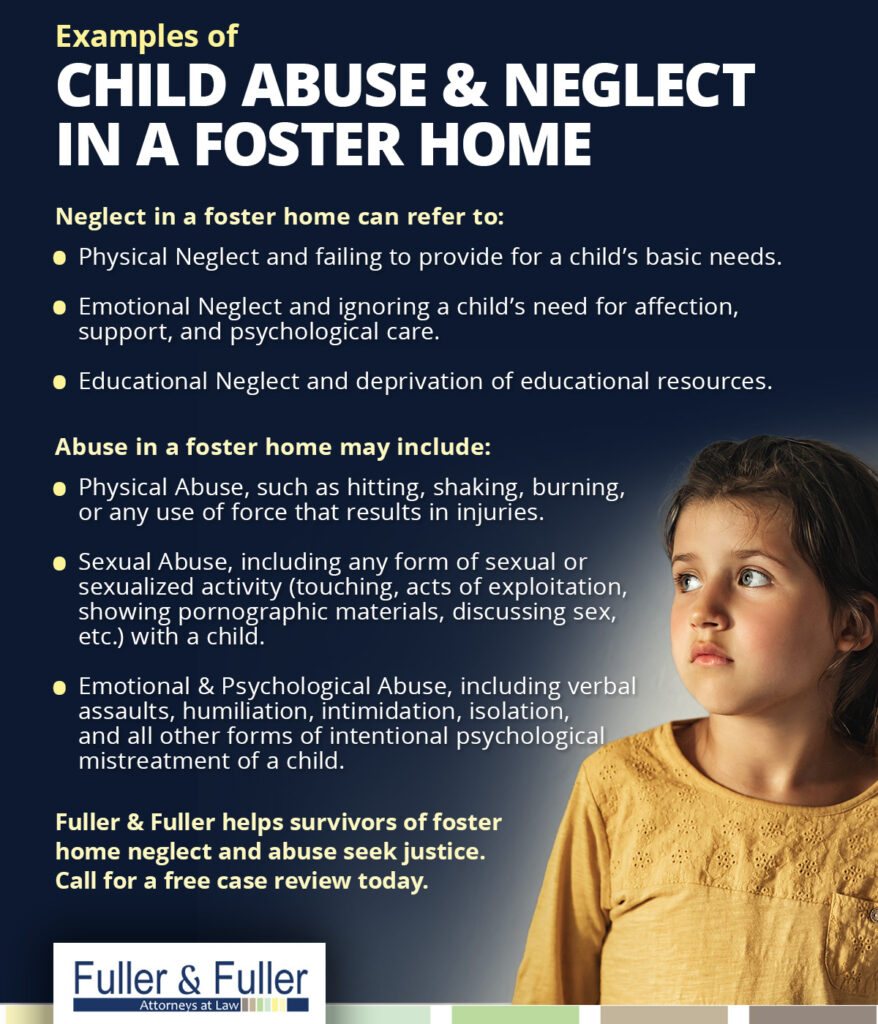
What Is Neglect in Foster Care?
Neglect is an all-encompassing label that can refer to several types of mistreatment in a foster home. These include:
Physical Neglect
Physical neglect in a foster home involves failing to provide for a child’s basic needs such as food, shelter, and medical care. Victims of physical neglect may be faced with unsafe living conditions and inadequate supervision. They are more likely to suffer from malnutrition and untreated medical conditions, and may also have poor hygiene, which can increase risks for additional concerns, including social rejection.
Emotional Neglect
Emotional neglect in a foster home involves ignoring a child’s need for affection, support, and psychological care. Foster children who are emotionally neglected may develop low self-esteem and feel like they are unworthy of affection. They are more likely to experience anxiety and depression and may have difficulties forming healthy relationships or trusting others as they age.
Educational Neglect
Educational neglect in a foster care setting occurs when appointed guardians fail to ensure a child attends school regularly. It may also occur when a special-needs child is deprived of educational resources. Educational neglect can have a substantial impact on academic performance, placing significant barriers to a child achieving their full potential and hindering future opportunities.
No matter the type of neglect, if you or someone you love has faced this type of mistreatment in their foster home, there may be legal avenues that can provide the compensation needed to deal with long-term consequences such as medical and psychological care and adult educational opportunities. Washington foster care neglect lawyer Marya Fuller is here to listen to your experiences and help you understand the most effective way to seek the justice you deserve.
What Is Abuse in Foster Care?
Similar to foster care neglect, abuse in a foster home can take on several different forms. These include:
Physical Abuse
Physical abuse in foster care may refer to any act that causes physical harm to a child, such as hitting, shaking, burning, or any use of force—excessive or otherwise—that results in bruises, cuts, broken bones, and other injuries. Beyond pain, children who are physically abused in a foster home may live in constant fear, face chronic stress and anxiety, and have difficulties concentrating or thriving in social and academic settings.
Sexual Abuse
Sexual abuse in a foster home involves any form of sexual or sexualized activity with a child—from touching and acts of exploitation to showing pornographic materials and discussing sex in ways that are neither age-appropriate or educational. The trauma from sexual abuse is often compounded by feelings of shame, guilt, and confusion, and victims may suffer from severe psychological and physical issues, including chronic pain, STIs, and pregnancy. The impact of sexual abuse in foster care can be profound, affecting emotional and social development, and resulting in an inability to feel safe or secure in future relationships.
Cases for compensation for sexual abuse can often be brought many years—even decades—after the abuse occurred. Do not hesitate to contact an attorney for an evaluation just because the abuse happened long ago.
Emotional & Psychological Abuse
Emotional abuse in foster care includes verbal assaults, humiliation, intimidation, isolation, and all other forms of intentional psychological mistreatment of a child. Victims of emotional abuse may feel constantly criticized or belittled, have difficulties developing healthy relationships, and fail to adjust to social situations. Like other types of foster care abuse, long-term consequences can include anxiety, depression, low self-esteem, and increased difficulties adjusting to adult life.
Children who have been abused by foster parents deserve compensation for their suffering. The Washington foster care abuse lawyers at Fuller & Fuller will assess your claim FREE of cost and obligation to help you understand your rights and options.
PTSD from Foster Care Neglect and Abuse
Many children in foster care experience abuse and neglect prior to being placed in the foster care system. This is made all the more tragic when these same children face abuse and neglect in their foster homes, which often results in lasting trauma as well.
People who suffer from PTSD may experience:
- Flashbacks and nightmares
- Severe anxiety
- Constant stress
- Delays in cognitive and emotional growth
- Academic difficulties
- Inability to concentrate
- Behavioral issues
- Problems forming relationships
Addressing PTSD may require psychological support, including therapy, medication, and, in some cases, hospitalization. Because PTSD is often a consequence of both neglect and abuse in foster care, the cost of treating it must be considered when seeking compensation. During your FREE consultation, we will carefully assess the ways your suffering has and may continue to impact your life to help you determine what your foster care abuse claim may be worth.
Is it Necessary to Contact a Foster Care Abuse Lawyer in Washington?
If you were abused while in foster care, it’s a good idea to talk to an attorney who specializes in foster care abuse claims, even if the abuse happened many years ago. A foster home abuse lawyer can investigate your claim to gather necessary evidence, guide you through the legal process, and protect your rights as you seek compensation. Your attorney can also assist with finding resources for support and helping ensure you are provided the opportunities you need to recover and heal, improving your chances of leading a fulfilling life.
At Fuller & Fuller, we are dedicated to helping victims of foster care mistreatment in Washington. As a family-run firm, we focus on compassion for victims and relentlessly pursue justice for people who have suffered at the hands of foster parents, group home employees, and other state-appointed guardians. We are here to offer our support, experience, and efforts toward ensuring your voice is heard and the justice you are due is sought.
Contact Our Experienced Washington Foster Home Abuse Attorneys for FREE
To schedule a FREE consultation with one of the foster home abuse attorneys at Fuller & Fuller, contact us online or call us today. We are committed to seeking justice for those who have been mistreated and are here to answer your questions, help you evaluate your legal options, and assist you in choosing the most effective way to pursue your case.
Fuller & Fuller has offices in Tacoma and Olympia. We fight for victims of foster care neglect and abuse in Seattle, Bellevue, Kent, Federal Way, Puyallup, Spokane, Lakewood, and throughout Washington.